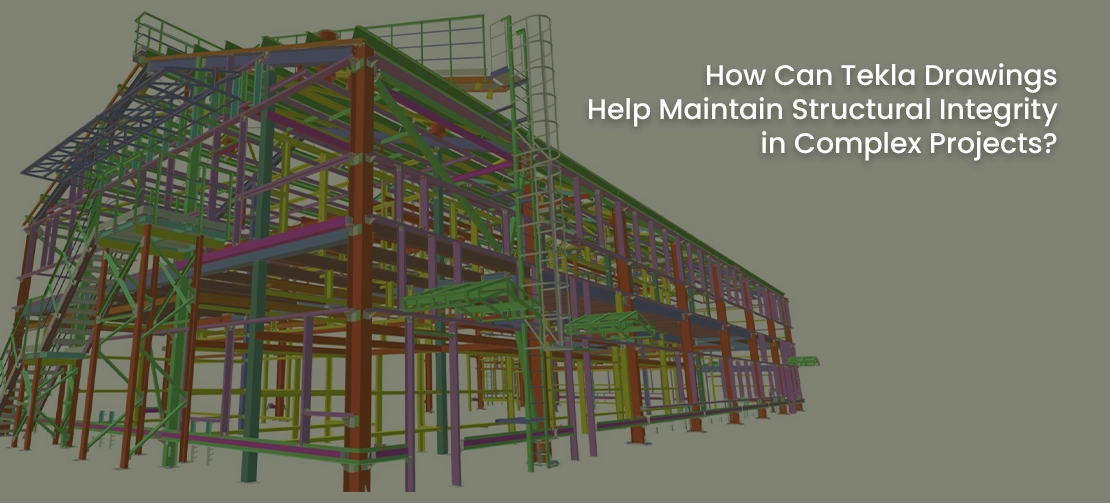
How Can Tekla Drawings Help Maintain Structural Integrity in Complex Projects?
Introduction
In modern construction, especially large-scale and complex projects, ensuring structural integrity is non-negotiable. Mistakes in steel fabrication, miscommunication between engineers and contractors, or overlooked connections can lead to cost overruns, delays, and safety hazards. One of the most effective tools to overcome these challenges is Tekla structural steel fabrication drawings.
These drawings, generated using Tekla Structures, provide highly accurate 3D models of steel structures, enabling engineers, fabricators, and contractors to maintain precision throughout the project lifecycle. This blog will explore how Tekla drawings support structural integrity, streamline project workflows, and prevent costly errors.
1. Understanding Structural Integrity in Complex Projects
Structural integrity refers to the ability of a structure to withstand its intended loads without failure or excessive deformation. In steel construction projects, this involves:
• Ensuring proper alignment of beams, columns, and trusses.
• Verifying that joints and connections are fabricated correctly.
• Minimizing errors during fabrication and erection.
• Industrial structures: Large spans, heavy loads, and specialized connections increase complexity.
• Bridges and infrastructure projects: Steel fabrication errors can compromise safety and longevity.
Without proper detailing and fabrication drawings, structural integrity can be compromised, resulting in safety hazards, project delays, and additional costs.
2. What Are Tekla Structural Steel Fabrication Drawings?
Unlike traditional 2D drawings, Tekla drawings integrate BIM (Building Information Modeling), ensuring every component is accurately designed, fabricated, and assembled.
Benefits of Tekla Drawings
Feature
Description
Benefit
3D Modeling
Provides a realistic visualization of the structure
Reduces misinterpretation
Connection Detailing
Shows exact bolt, weld, and joint positions
Prevents fabrication errors
Clash Detection
Identify conflicts between structural components
Minimizes rework
Revision Tracking
Maintains updated drawings during project changes
Ensures consistency
Collaboration
Allows engineers, fabricators, and contractors to work on the same model
Improves communication
3. How Tekla Drawings Help Maintain Structural Integrity
Tekla drawings maintain structural integrity by addressing critical aspects of steel construction:
3.1 Accurate Component Fabrication
Tekla ensures every beam, column, and truss is dimensioned correctly. Fabricators can directly use these drawings to produce precise steel components, minimizing deviations that could compromise structural integrity.
3.2 Detailed Connection Information
Connections are often the most critical points in steel structures. Tekla drawings provide:
• Exact locations for bolts and welds
• Load specifications for connections
• Type and size of fasteners required
This accuracy ensures that steel joints withstand the intended loads and structural stability is maintained.
3.3 Clash Detection and Error Reduction
In complex projects, components may interfere with each other if not carefully planned. Tekla BIM detects these clashes during the design phase, preventing costly on-site corrections and ensuring structural reliability.
3.4 Streamlined Communication
Tekla drawings enable all stakeholders, engineers, fabricators, and contractors—to view the same 3D model. This reduces miscommunication and ensures everyone follows consistent instructions, preserving the structure’s integrity.
3.5 Revision and Change Management
During large projects, designs often change due to site conditions or client requirements. Tekla’s revision tracking ensures all updates are incorporated into fabrication drawings, eliminating errors caused by outdated information.
4. Key Features of Tekla Supporting Structural Integrity
Tekla Feature
Description
How It Supports Structural Integrity
3D BIM Modeling
3D representation of steel structures
Accurate visualization reduces misalignment
Detailed Fabrication Drawings
Includes beams, columns, trusses, and joints
Precise fabrication prevents structural failure
Clash Detection
Detects overlapping or conflicting components
Reduces rework and ensures stability
Erection Sequences
Step-by-step assembly instructions
Proper load distribution during assembly
Collaboration Platform
Multi-user access for engineers, contractors, and fabricators
Consistent execution across teams
5. Common Challenges in Maintaining Structural Integrity
Even with skilled teams, complex projects face these challenges:
• Misinterpretation of 2D drawings leading to assembly errors.
• Fabrication errors due to inaccurate measurements.
• On-site modifications without updating drawings.
• Poor communication between engineers, fabricators, and contractors.
• Safety hazards from improperly connected components.
Tekla drawings directly address these pain points by providing accurate, real-time, and collaborative 3D models.
6. Real-World Examples
Case Study 1: High-Rise Residential Project
Issue: Multiple beam and column misalignments delayed the project.
Solution: Using Tekla structural steel fabrication drawings, all components were pre-verified in 3D, clashes were resolved, and fabrication was accurate.
Outcome: Project completed on time with zero rework on steel components.
Case Study 2: Industrial Warehouse Construction
Issue: Fabrication errors led to wasted steel and extra costs.
Solution: Tekla drawings provided detailed connection and load information.
Outcome: Material waste reduced by 20%, ensuring structural integrity and cost savings.
7. Best Practices for Using Tekla Drawings
• Review Drawings Before Fabrication: Ensure all components meet design specifications.
• Integrate BIM with Quality Checks: Use 3D models to verify on-site assembly.
• Use Clash Detection Tools: Identify potential conflicts before fabrication.
• Train Teams: Engineers, fabricators, and contractors should understand Tekla drawings.
• Regular Updates: Keep drawings updated with any design or site changes.
Conclusion
Maintaining structural integrity in complex steel projects is critical for safety, efficiency, and cost-effectiveness. Tekla structural steel fabrication drawings provide detailed, accurate, and collaborative 3D models that prevent errors, improve communication, and streamline fabrication and erection.
At Gridsglobal, we specialize in providing comprehensive Tekla detailing services, helping contractors, fabricators, and engineers execute complex projects with precision. By leveraging Tekla drawings, Gridsglobal ensures your steel structures are built safely, efficiently, and to the highest quality standards.
Partner with Gridsglobal to take the guesswork out of steel fabrication and maintain structural integrity from design to completion.
Frequently Asked Questions
Q1: What are Tekla structural steel fabrication drawings?
A1: They are detailed 3D drawings showing steel components, connections, and assembly sequences, ensuring accuracy in fabrication and construction.
Q2: How do Tekla drawings prevent structural failure?
A2: They provide precise dimensions, load specifications, and connection details, reducing errors that could compromise structural integrity.
Q3: Can Tekla drawings handle complex steel connections?
A3: Yes, Tekla can model intricate connections, including trusses, braces, and multi-directional joints.
Q4: Do Tekla drawings reduce material waste?
A4: Yes, by providing accurate fabrication details, they minimize cutting errors and material wastage.
Q5: How does Tekla support collaboration?
A5: Multiple stakeholders can access the same 3D model, ensuring consistent instructions and reducing miscommunication.
Q6: Are Tekla drawings suitable for large infrastructure projects?
A6: Absolutely. They are widely used for high-rise buildings, bridges, warehouses, and industrial structures.
Q7: How do Tekla drawings integrate with on-site assembly?
A7: Erection sequences and detailed component information guide construction teams for accurate installation.