• Contact Us

    +1(302)231-1850

  • Visit Our Place

    1207,DELAWARE AVE UNIT 2877, WILMINGTON, DE 19806

How Does Steel Primary Member Design Improve Shop Drawing Preparation?

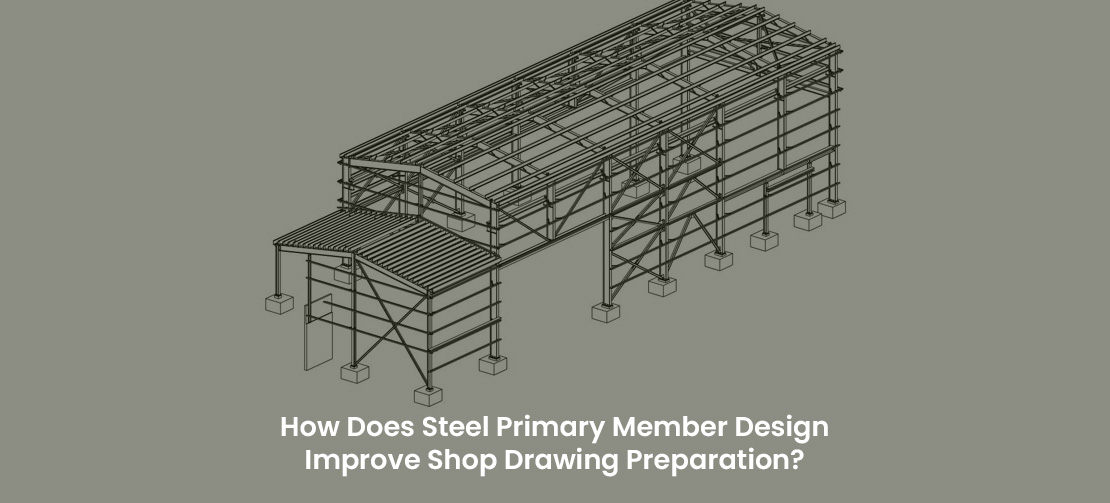
Accurate steel primary member design is an important part of preparing reliable shop drawings for structural steel fabrication.

Primary members such as beams, columns, girders, rafters, and major framing elements carry significant structural loads and form the main framework of a steel building.

When these members are properly designed and coordinated, the shop drawing process becomes more accurate, consistent, and fabrication-ready.

At Gridsglobal, we provide structural steel detailing and engineering support for fabrication and construction projects.

Our approach connects primary structural member design, 3D modeling, connection coordination, and shop drawing preparation to help fabricators work from coordinated project information.

What Is Steel Primary Member Design?

Steel primary member design involves determining the appropriate structural size, material grade, geometry, and load-carrying capacity of major steel framing components.

These members transfer gravity loads, lateral loads, wind forces, and other applicable structural actions through the building’s structural system.

Depending on the project, primary members can include steel columns, beams, girders, trusses, rafters, and other major framing components.

Their design must consider structural analysis, applicable design codes, load combinations, stability, serviceability, member strength, and connection requirements.

The final design information provides an important foundation for creating detailed fabrication drawings.

How Does Primary Member Design Improve Shop Drawing Preparation?

Accurate Member Sizes and Geometry

Shop drawings require precise information about member sizes, lengths, elevations, orientations, and locations.

When primary members are properly designed before detailing begins, the detailing team can use verified structural information when developing fabrication drawings.

Accurate member geometry also helps reduce discrepancies between engineering models and fabrication drawings.

Better Coordination Between Design and Detailing

Primary member design establishes the structural framework that detailers use to develop the steel model.

This creates a coordinated workflow between engineering and detailing.

Improved Connection Coordination

Primary members are closely connected with structural steel connections.

Beam-to-column connections, moment connections, bracing connections, base connections, and other connection arrangements must be represented accurately in fabrication documentation.

A properly developed primary member model allows connection geometry, bolt arrangements, plate dimensions, weld requirements, and supporting members to be coordinated more effectively.

Reduced Fabrication Errors

Fabrication drawings contain the dimensions and information required for manufacturing steel components.

Errors in member sizes, orientation, location, or connection geometry can result in fabrication delays and rework.

A coordinated steel primary member design helps establish consistent information throughout the detailing workflow, reducing the possibility of discrepancies between design intent and fabrication documentation.

Better 3D Structural Modeling

Modern steel detailing workflows commonly use 3D modeling platforms to coordinate structural components.

Software such as Tekla Structures and SDS2 can help detailers develop intelligent models containing member information, connections, assemblies, and fabrication data.

When the primary structural members are correctly defined, the 3D model becomes a stronger foundation for generating shop drawings and related fabrication deliverables.

Primary Member Design and Shop Drawing Workflow

The relationship between design and shop drawing preparation can be understood through the following workflow.

Stage Primary Activity Contribution to Shop Drawings
Structural Analysis Loads and structural behavior are evaluated Establishes design requirements
Member Design Beams, columns, girders and other primary members are designed Defines member sizes and properties
3D Modeling Structural members are modeled and coordinated Establishes accurate geometry
Connection Coordination Connections are developed and checked Supports fabrication-ready connection details
Clash Coordination Member and connection conflicts are identified Reduces drawing revisions
Shop Drawing Preparation Fabrication drawings are generated Provides manufacturing information
Quality Review Drawings and model are checked Improves consistency and accuracy

Role of Tekla Structures and SDS2

Tekla Structures and SDS2 are widely used in structural steel detailing workflows.

These platforms allow structural steel components to be represented within detailed 3D models and can support the generation of fabrication documentation.

For projects involving complex framing, the combination of primary member design and detailed 3D modeling can help identify geometric conflicts before fabrication begins.

Model-based coordination can also support the preparation of assembly drawings, erection drawings, and individual part information.

At Gridsglobal, our steel detailing workflow can integrate engineering information with 3D modeling and fabrication documentation to support different project requirements.

How Does Primary Member Design Support Fabricators?

Fabricators need reliable information to manufacture and assemble structural steel components.

Shop drawings must communicate member dimensions, material specifications, connection information, hole locations, plates, welds, and other fabrication requirements.

When the primary members have been properly coordinated, the detailing process can maintain consistency between the structural design and fabrication documentation.

This is particularly important for large industrial facilities, warehouses, commercial buildings, and other steel-framed structures where numerous components must work together.

Importance of Design-to-Detail Coordination

A major advantage of integrating primary member design with detailing is improved communication between structural engineering and fabrication teams.

Changes to a beam size, column position, framing elevation, or connection arrangement can affect multiple components.

If these changes are not reflected consistently throughout the model and drawings, fabrication problems may occur.

A coordinated workflow allows design changes to be reviewed within the structural model and incorporated into the relevant fabrication documentation.

How Gridsglobal Supports Steel Detailing Projects

Gridsglobal provides structural steel detailing services for fabrication and construction projects.

Our workflow can support primary member modeling, secondary steel coordination, connection detailing, 3D structural modeling, shop drawing preparation, and drawing quality checks.

For projects requiring detailed fabrication documentation, our team focuses on maintaining coordination between structural information, 3D models, and drawing outputs.

This approach helps create a structured workflow from engineering data through to fabrication documentation.

Conclusion

Steel primary member design provides a technical foundation for accurate shop drawing preparation. Correct member sizing, structural geometry, load-path considerations, stability requirements, material specifications, and connection coordination all influence the quality of fabrication documentation.

From a technical detailing perspective, the primary structural model should maintain consistency between member properties, coordinates, elevations, connection geometry, and fabrication requirements.

Model-based coordination through platforms such as Tekla Structures and SDS2 can further support clash identification, connection development, assembly modeling, and drawing generation.

For steel fabrication projects, integrating primary structural member design, 3D steel detailing, connection coordination, and shop drawing preparation creates a more controlled design-to-fabrication workflow.

Gridsglobal supports this process through structural steel detailing and fabrication documentation services designed around project-specific engineering and detailing requirements.

Frequently Asked Questions

What are primary members in a steel structure?

Primary members are major structural components that form the main load-carrying framework of a steel building. Common examples include columns, beams, girders, rafters, and major truss components.

Why is primary member design important for shop drawings?

Primary member design provides essential information about member sizes, geometry, material requirements, and structural configuration. This information forms the basis for developing accurate fabrication drawings.

What information is required for steel shop drawings?

Steel shop drawings generally include member dimensions, material specifications, connection details, bolt information, weld information, hole locations, assembly information, and other fabrication requirements.

How does 3D modeling support primary member detailing?

3D modeling allows structural members and connections to be represented within a coordinated digital environment. This can help identify geometry conflicts and support the preparation of fabrication and erection drawings.

Can Tekla Structures be used for primary steel member detailing?

Yes. Tekla Structures can be used to develop detailed 3D structural steel models and generate fabrication-related documentation depending on project requirements and modeling standards.

How does SDS2 support steel fabrication projects?

SDS2 provides tools for structural steel modeling, connection detailing, fabrication documentation, and related steel detailing workflows.

What types of buildings require primary member design?

Primary member design is relevant to many steel-framed structures, including commercial buildings, industrial facilities, warehouses, institutional buildings, and other engineered steel structures.

How can primary member design reduce shop drawing revisions?

Accurate member geometry and coordinated structural information can reduce inconsistencies between the engineering design, 3D model, connections, and fabrication drawings, which may help reduce revision requirements.

What is the difference between primary and secondary steel members?

Primary members generally form the principal load-carrying structural framework, while secondary members support the primary system or perform additional framing functions. The classification depends on the structural system and project requirements.

Why is coordination important before steel fabrication?

Coordination helps verify that structural members, connections, elevations, openings, and related components work together before fabrication. Identifying issues during the modeling and detailing stage can help avoid costly fabrication-stage changes.